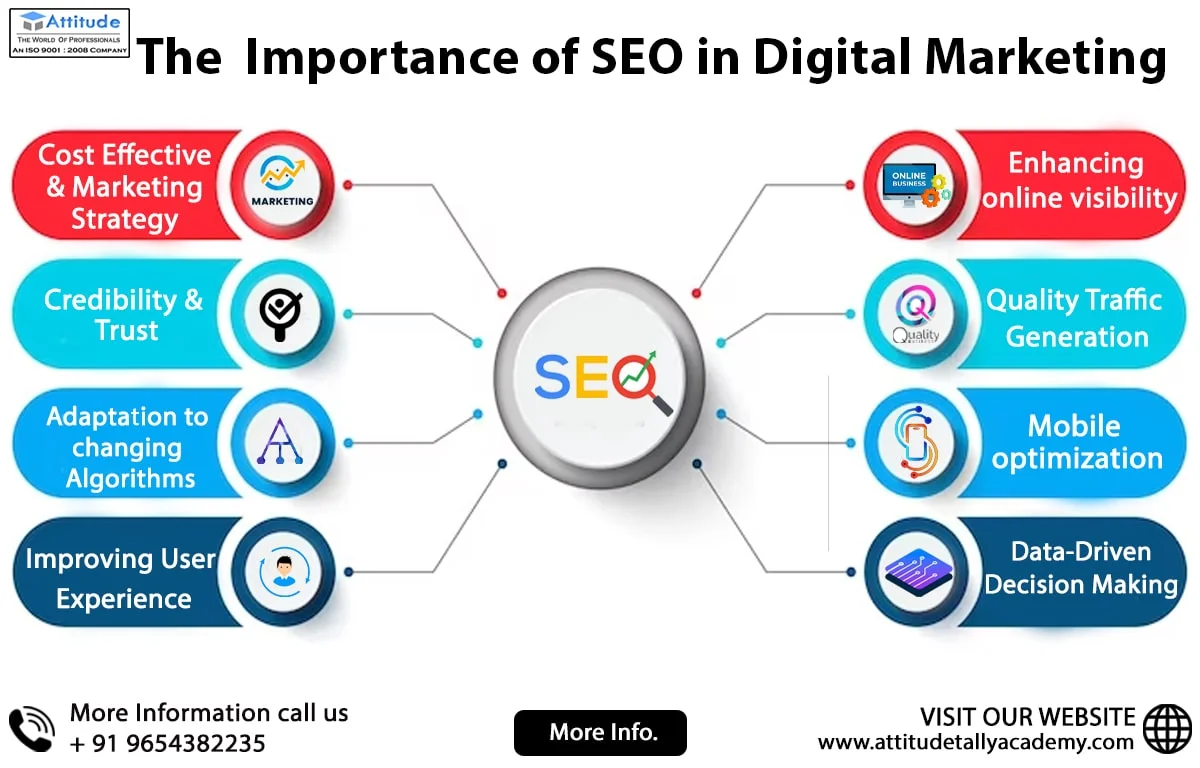
Search Engine Optimization (SEO) is one of the most powerful pillars of digital marketing. In today’s competitive online environment, simply having a website is not enough; it needs to be visible to the right audience. SEO ensures that businesses appear on search engines like Google when potential customers are actively looking for products or services, making it a highly effective and cost-efficient strategy.
One of the biggest advantages of SEO is organic traffic generation. Unlike paid advertising, which stops bringing results once the budget runs out, SEO builds long-term visibility. By optimizing a website with relevant keywords, quality content, and a strong technical structure, businesses can rank higher in search results, attracting consistent visitors without continuous ad spending.
Another critical factor is credibility and trust. Users often perceive websites on the first page of Google as more reliable and trustworthy. Good SEO practices, such as creating helpful content, improving page speed, and ensuring mobile-friendliness, enhance user experience, which builds long-term relationships with customers.
SEO also complements other digital marketing strategies. For example, content marketing efforts are more effective when optimized for search engines, and social media campaigns can drive backlinks that strengthen rankings. This integration makes SEO the backbone of a successful online presence.
In addition, SEO provides measurable results. With tools like Google Analytics and Search Console, businesses can track traffic, keyword performance, and user behavior, helping them refine their marketing strategies.
Ultimately, SEO is not just about ranking higher; it’s about connecting with the right audience at the right time. Businesses that invest in SEO enjoy better visibility, stronger customer trust, and sustainable growth in the digital marketplace.